

Views: 0 Author: Site Editor Publish Time: 2026-10-21 Origin: Site


An autonomous tractor uses positioning technology, onboard sensors, control software, and machine systems to perform agricultural tasks with limited or no direct driving input. Depending on its design, it may follow mapped routes, monitor its surroundings, control steering, and work with selected implements while an operator supervises the operation.
Understanding how an autonomous tractor works helps farm owners evaluate its capabilities, safety requirements, and suitability for different field operations. The main factors include navigation accuracy, obstacle detection, implement compatibility, communication, and the level of human supervision required.
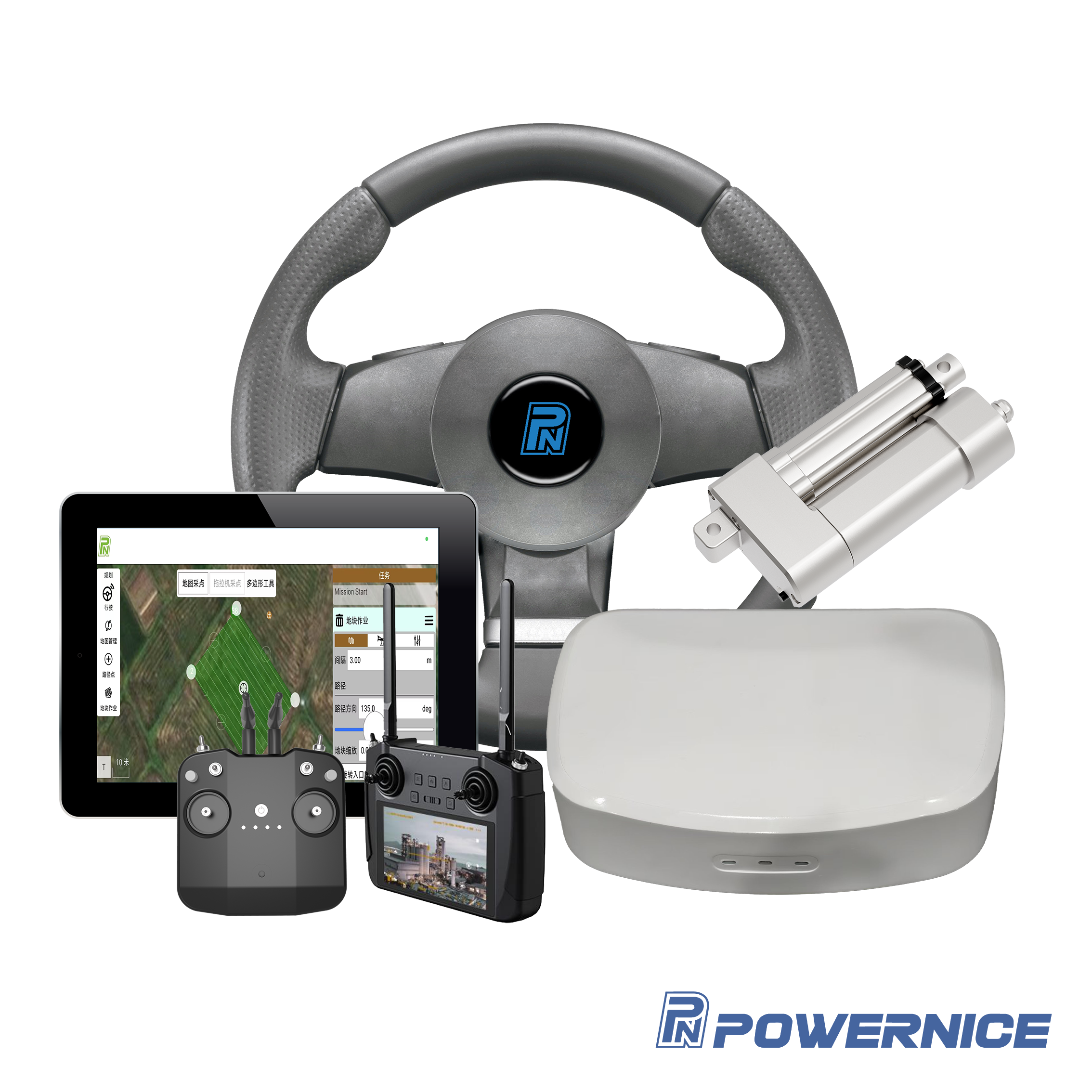
Table of Contents
An autonomous tractor is an agricultural machine that uses automated control systems to perform some or all driving tasks. Depending on the system, it may operate along planned routes, steer through field rows, respond to detected obstacles, and coordinate with compatible agricultural implements.
Autonomy levels vary. Some tractors provide automated steering while a person remains in the cab. Others support remote supervision or driverless operation within defined conditions. These functions are not interchangeable, so buyers should confirm what the specific system can do.
Powernice offers an autonomous driving system for agricultural machinery, designed to support the integration of autonomous control into agricultural equipment. Compatibility and available functions should be confirmed for the target tractor model.
An autonomous tractor typically combines four main functions: positioning, environmental perception, route planning, and vehicle control. The exact hardware and software depend on the manufacturer and application.
The navigation system estimates the tractor's location and movement. Depending on the setup, it may use satellite positioning, correction services such as RTK, inertial sensors, wheel-speed data, or other inputs.
RTK positioning can improve repeatability when suitable correction data and operating conditions are available. Actual accuracy depends on the receiver, correction source, satellite visibility, installation, and field environment. Buyers should check the manufacturer's stated accuracy and verify performance under local conditions.
Farm operators can create digital field boundaries and planned routes. The system then uses its position estimate to follow the route and manage turns where supported. Geofencing can help define operating boundaries, but it should not be treated as a substitute for supervision or physical safety measures.
Navigation helps the tractor follow a route. Environmental perception helps it identify relevant objects and changes around the machine.
Depending on the system, sensors may include cameras, LiDAR, radar, ultrasonic sensors, or other devices. Each technology has different strengths and limitations. Cameras provide visual information, while LiDAR and radar can provide distance or object data in different ways.
Sensor fusion combines available inputs to help the system interpret its surroundings. However, detection performance can change with dust, rain, lighting, vegetation, sensor placement, and object characteristics. No sensor configuration should be assumed to detect every obstacle in every condition.
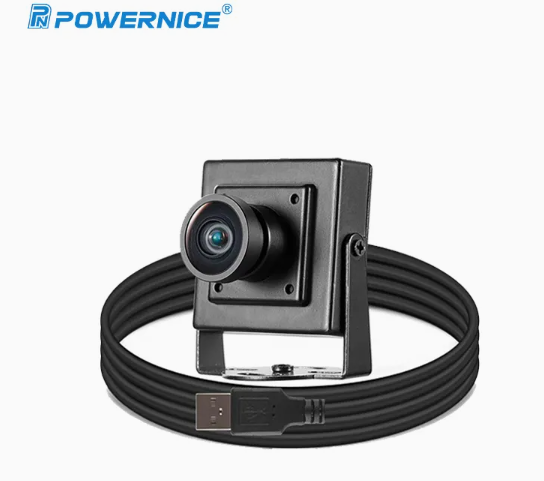
Powernice provides an agricultural camera for driverless tractor applications. When evaluating a camera or perception package, check its field of view, environmental protection, processing requirements, integration method, and compatibility with the tractor's control system.
The control computer processes positioning data, sensor inputs, route information, and machine status. Software uses these inputs to determine the next control actions, such as adjusting steering or slowing down when required by the system's operating logic.
Many autonomous systems process time-sensitive control information onboard. Remote platforms may be used for task planning, fleet monitoring, data review, and software management. The division between onboard and remote functions varies by product.
This distinction matters when connectivity is unreliable. Some systems can continue an approved task locally during a temporary connection loss, while others may pause or require operator intervention. Buyers should confirm the documented behavior for communication loss, positioning errors, sensor faults, and other abnormal conditions.
Once the system determines the required movement, it sends commands to compatible steering, transmission, engine, braking, or implement-control systems. Available functions depend on the tractor and the autonomy package.
During fieldwork, the system may follow planned passes and manage turns. Some configurations can also exchange data with compatible implements to support functions such as section control or application-rate management. These capabilities require suitable hardware, software, and implement compatibility.
A tractor that can navigate autonomously does not automatically control every attached implement. Confirm which operations are supported and whether the implement requires separate setup, calibration, or operator supervision.
Although workflows differ, a typical operation follows several stages.
The operator checks field boundaries, access routes, known obstacles, terrain conditions, and the condition of the tractor and implement. The team also confirms that sensors, positioning equipment, and safety functions are ready for use.
Field maps should be reviewed before the mission starts. Changes such as new fences, irrigation equipment, or temporary storage areas may require map updates or additional precautions.
The operator selects the field and task, then configures the required route and operating parameters. Depending on the system, these settings may include working width, headland turns, speed limits, and implement settings.
The planned route should match the field layout and the equipment's turning and operating limits. The operator should review the mission before authorizing the machine to begin.
After the required checks and authorizations, the tractor begins the task according to its supported operating mode. The operator monitors its status using the available interface and follows the manufacturer's supervision requirements.
Powernice also offers a remote controller for agricultural tractors and unmanned machinery. A remote controller can support specific remote-control functions, but it should not be assumed to provide every autonomous driving or fleet-management capability.
If the system detects a condition that exceeds its operating limits, it may slow down, stop, issue an alert, or request operator intervention, depending on its design.
The operator should follow the documented procedure rather than bypassing a warning without checking the cause. The system's response to obstacles, sensor faults, communication loss, or positioning errors must be confirmed before deployment.
After the task, the operator reviews work records and checks for incomplete areas, unexpected stops, or equipment issues. Maintenance may include cleaning sensors, inspecting wiring and connectors, checking mechanical components, and updating software where required.
The maintenance schedule should follow the equipment manufacturer's instructions and reflect actual field conditions.
Farm owners generally consider either a factory-integrated machine or an autonomy system fitted to an existing tractor. The right choice depends on compatibility, investment, support, and the required level of automation.
Evaluation factor | Factory-integrated system | Retrofitted system |
|---|---|---|
Integration | Designed around the specified machine and control architecture | Depends on tractor compatibility and retrofit design |
Initial investment | Usually involves purchasing a purpose-built or newly equipped machine | May allow continued use of an existing tractor |
Fleet flexibility | May depend on the manufacturer's supported equipment range | Can support selected existing models when compatibility is confirmed |
Installation | Supplied as an integrated configuration | Requires installation, calibration, and validation |
Technical support | May be coordinated through the machine supplier | May involve both the tractor dealer and autonomy provider |
Before choosing a retrofit, confirm compatibility with the steering system, vehicle controls, sensors, braking functions, and intended implements. Do not assume that a kit fits every tractor or preserves every existing warranty.
Autonomous operation does not remove the need for safety planning. Heavy machinery can create serious risks around workers, livestock, vehicles, and other equipment.
Before deployment, confirm the system's documented safety functions and its response to faults. Important questions include:
What happens if positioning accuracy falls below the permitted limit?
How does the system respond when a sensor is blocked or fails?
What happens if the remote connection is interrupted?
Which emergency stop functions are available, and where are they located?
What supervision and exclusion zones are required?
Which operating environments and tasks are approved?
Use the manufacturer's training, risk assessment, and operating procedures. Applicable laws, insurance terms, and restrictions on driverless machinery vary by location and use case, so verify local requirements before operating the equipment.
The required infrastructure depends on the autonomy system. Some farms may need accurate digital field maps, satellite correction services, reliable local communications, suitable charging or refueling facilities, and technicians trained to maintain electronic systems.
A continuous high-speed internet connection is not necessarily required for every onboard control function. However, remote monitoring, task updates, fleet coordination, and support services may depend on network access.
Farm operators should assess connectivity across the fields, the quality of positioning data, the availability of local service, and the team's ability to troubleshoot both mechanical and electronic faults.
Autonomous systems may be suitable for repetitive operations with clearly defined routes and compatible implements. Examples can include selected tillage, planting, mowing, and spraying tasks.
Suitability depends on field layout, terrain, crop spacing, obstacle density, implement requirements, and the system's approved operating conditions. Complex or changing environments may require closer supervision or manual operation.
To assess the business case, compare the system's total cost with measurable operating factors, such as labor availability, field capacity, fuel or energy use, input overlap, maintenance, and downtime. A small pilot project can help validate these assumptions before wider deployment.
An autonomous tractor works by combining positioning, environmental perception, onboard computing, and vehicle control. These systems can automate selected field operations, but their capabilities and safety behavior depend on the specific hardware, software, tractor, and implement configuration.
Before purchasing or retrofitting a system, confirm navigation performance, sensor capabilities, implement compatibility, fault responses, supervision requirements, and local compliance. Evaluate the system under real field conditions rather than relying only on general performance claims.
Explore Powernice's autonomous tractor system, agricultural camera, and agricultural remote controller. Share your tractor model, intended task, and operating conditions with the supplier to discuss system compatibility.
It uses positioning data, a planned route, and vehicle-control software to follow the required path. The technologies and accuracy vary by system.
No. Sensor configurations differ. Some systems use cameras and satellite positioning, while others combine additional sensors.
Some systems can perform selected onboard functions without a continuous internet connection. Remote monitoring and other features may require connectivity, so check the system's specifications.
Some tractors can be retrofitted, but compatibility with the steering, controls, sensors, and implements must be confirmed first.
Autonomy does not remove the need for risk assessment, safety procedures, and any supervision required by the manufacturer or local regulations.
