

Views: 0 Author: Site Editor Publish Time: 2026-10-15 Origin: Site


An agricultural autonomous driving system helps farming machinery navigate fields and perform selected operations with reduced direct driver input. Depending on the system design, it may support automatic steering, route planning, obstacle detection, remote monitoring, and control of compatible implements.
These systems can help farms address labor shortages, improve repeatability, and manage time-sensitive field operations. However, their capabilities vary by vehicle, implement, software, sensor configuration, and operating environment. Automatic steering alone does not make a tractor fully autonomous.
This guide explains how agricultural autonomous driving systems work, their main components, common deployment models, and the factors farm operators should evaluate before adoption.
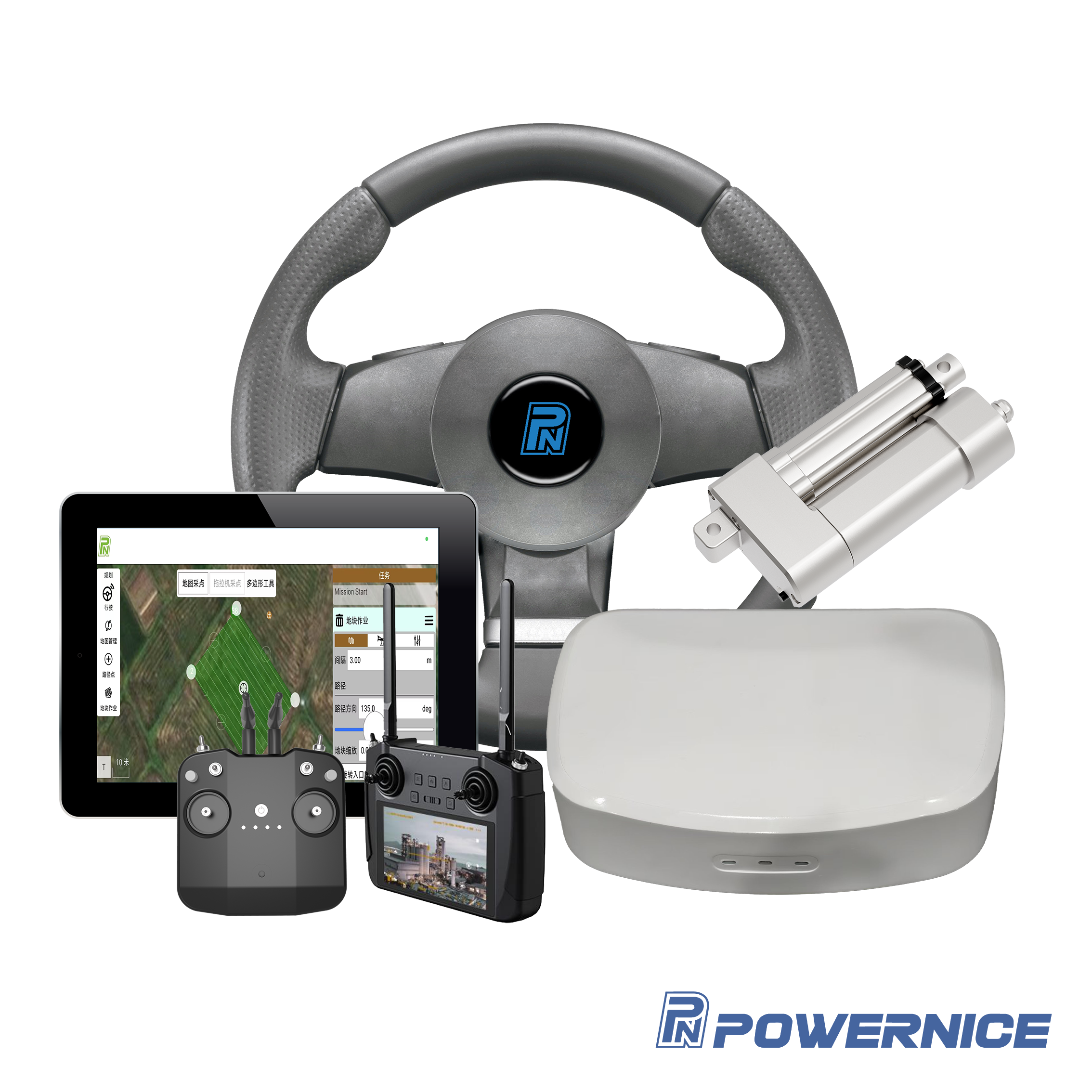
Table of Contents
An agricultural autonomous driving system combines positioning technology, environmental sensors, vehicle controls, and software to guide agricultural machinery through planned tasks. Depending on its capabilities, the system may automate steering, follow field routes, detect obstacles, or support remote operation.
The term covers several types of equipment. Some systems assist a driver who remains in the cab. Others allow a supervisor to monitor a machine remotely. More advanced platforms can perform specific field tasks without an onboard driver, within defined operating conditions and safety limits.
The level of autonomy should therefore be evaluated by actual functions rather than by a single label. Buyers should confirm which tasks are automated, which require human supervision, and what happens when the system detects a fault or encounters an unexpected obstacle.
Satellite positioning, including Global Navigation Satellite Systems (GNSS), can help machinery determine its location and follow planned field paths. Systems that require high pass-to-pass accuracy may use Real-Time Kinematic (RTK) corrections.
RTK performance depends on correction availability, receiver configuration, local conditions, and the overall positioning setup. Not every agricultural task requires the same accuracy. The appropriate solution depends on the crop, row spacing, implement, and operation.
Inertial Measurement Units (IMUs), wheel-speed sensors, and steering-angle sensors can provide additional motion information. Combining these inputs may help the vehicle estimate its movement when satellite positioning becomes temporarily unreliable. However, positioning errors can accumulate during signal loss, so the system needs a suitable response for its operating conditions.
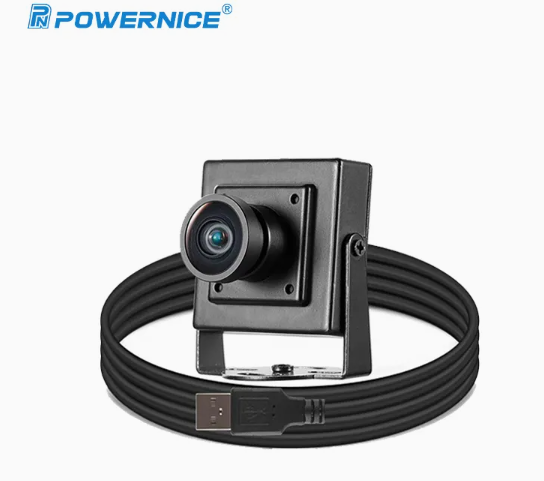
Sensors help the machine detect field boundaries, obstacles, people, animals, and other equipment. Depending on the system, these may include cameras, LiDAR, radar, or other proximity sensors.
Cameras provide visual information about the surroundings. LiDAR can measure distances and create spatial representations of nearby objects. Radar can provide complementary detection data in some conditions where visibility is reduced.
No single sensor works equally well in every field environment. Dust, rain, fog, glare, crop residue, vegetation, and changing light can affect sensor performance. A system's obstacle detection should be evaluated under the conditions expected on the farm.
Navigation software must communicate with the vehicle's steering, braking, propulsion, and other control systems. The implementation may use electronic controls, hydraulic steering interfaces, actuators, or a combination of technologies.
The level of integration affects response, compatibility, and maintenance. A retrofit system may need additional hardware and calibration, while a purpose-built platform may have controls designed for autonomous operation.
Before installation, confirm that the system supports the target vehicle model and its required control interfaces. Do not assume that a kit designed for one tractor can be installed on another without modification.
The onboard computer processes sensor inputs, calculates routes, and coordinates vehicle actions. The software may also manage task boundaries, operating parameters, alerts, and communication with a remote supervisor.
Edge computing allows supported tasks to be processed on the machine instead of relying entirely on a cloud connection. This can help maintain local processing when internet connectivity is limited. However, the system's safe response to a communication or positioning failure must be verified separately.
Remote interfaces can allow operators to view machine status, receive alerts, assign tasks, or take control when supported. Depending on the product, this may involve a handheld remote controller, a mobile application, a tablet, or fleet management software.
Remote control and autonomous operation are different functions. A remotely controlled machine still depends on human commands, while an autonomous system can perform defined tasks using onboard control logic. Some platforms support both modes.
See PowerNice's agricultural autonomous driving system for an example of a product in this category.
Driving a tractor along a planned route is only one part of an agricultural operation. The system may also need to coordinate with an attached implement, such as a planter, sprayer, mower, or harvesting tool.
Implement management can include controlling operating status, monitoring task parameters, or coordinating movement with the tractor. The available functions depend on the vehicle, implement, controller, and software.
ISOBUS, based on the ISO 11783 standard, supports communication between compatible tractors and implements. Features such as Tractor Implement Management (TIM) are available only when the relevant equipment and configurations support them. Buyers should verify compatibility rather than assume every implement can be controlled automatically.
For example, a compatible system may coordinate tractor movement with an implement's operating requirements. Other setups may only provide guidance and leave implement adjustments to the operator. The distinction matters when comparing system capabilities and expected labor savings.
Automatic steering systems follow a planned line or path while a driver remains responsible for supervision and other vehicle functions. They can help improve pass-to-pass consistency and reduce the physical effort required for steering.
These systems may suit farms that want to improve guidance without replacing existing machinery. However, automatic steering does not necessarily include autonomous headland turns, obstacle avoidance, or implement management.
Supervised systems can automate more of a field task while a human operator or remote supervisor monitors operation. Depending on the platform, the system may follow routes, detect obstacles, manage selected implement functions, or pause for human input.
The required supervision level should be clearly defined. Buyers should ask how many machines one supervisor can oversee safely under the intended working conditions rather than relying on a general fleet-size claim.
Remote-controlled machines receive commands from an operator using a dedicated controller or supported interface. They can be useful in applications where the operator should remain away from the vehicle, such as some mowing or terrain-maintenance tasks.
Remote control does not automatically mean the machine can plan and complete a task independently. Confirm whether the product supports direct remote operation, autonomous navigation, or both.
PowerNice also offers a professional remote controller for tracked agricultural tractors and unmanned machinery.
Purpose-built machines are designed around a defined task and operating environment. Examples may include autonomous mowing robots or specialized agricultural platforms.
These machines can offer closer integration between sensors, controls, and the working tool. However, their suitability depends on terrain, vegetation, operating boundaries, maintenance access, and the task being performed.
Explore the Taurus80E autonomous mowing robot as an example of PowerNice's autonomous equipment range.
Farms can introduce autonomy by upgrading compatible existing machinery or purchasing equipment designed for autonomous operation.
Evaluation factor | Retrofit system | Purpose-built equipment |
|---|---|---|
Initial equipment strategy | Upgrades selected existing machines | Purchases a platform designed for its intended task |
Compatibility | Depends on vehicle controls and available interfaces | Designed around a defined vehicle and control architecture |
Installation | May require brackets, wiring, calibration, or hydraulic integration | Integration is generally part of the machine design |
Flexibility | May support multiple compatible vehicle models | May be optimized for a narrower range of tasks |
Support | May involve both the retrofit provider and machine manufacturer | Support arrangements depend on the equipment supplier |
Best fit | Farms seeking to extend compatible existing assets | Farms needing a dedicated platform for a defined operation |
Neither option is best for every farm. Compare total installation cost, machine compatibility, service access, software updates, and the expected operating conditions before choosing a solution.
Ask how the system detects people, animals, other machinery, and unexpected obstacles. Review its behavior in dust, rain, low light, dense vegetation, and uneven terrain where relevant.
Obstacle detection is only one part of safety. Confirm whether the machine stops, alerts a supervisor, or follows another defined response when it detects a hazard. Verify the system's limits and do not assume it can autonomously navigate around every obstacle.
Match positioning performance to the task. Planting, mechanical weeding, mowing, and broad-area spraying may have different accuracy requirements.
Ask the supplier how accuracy is measured, what correction services are required, and how the system behaves when positioning quality declines. Test performance in representative field conditions rather than relying only on laboratory specifications.
Check the tractor model, steering and braking interfaces, power requirements, implement connections, and available communication protocols. If ISOBUS or another data interface is required, verify support for the specific vehicle and implement combination.
For mixed fleets, also evaluate data export, task-file compatibility, maintenance responsibilities, and whether the system can integrate with the farm's existing management software.
Some functions require network access, correction data, or remote monitoring. Before deployment, map cellular coverage and confirm how the system behaves when a network or correction signal is unavailable.
Local processing can support certain onboard functions without a continuous cloud connection, but it does not remove every connectivity dependency. Determine which features continue working, which are degraded, and which require the machine to stop or enter another safe state.
Review the emergency stop, remote intervention, operating boundaries, restart procedure, and fault response. Establish who is responsible for monitoring the machine and what training operators need.
Check the supplier's documentation, service process, spare parts availability, warranty terms, and software support arrangements. These factors can affect long-term operating reliability as much as the initial equipment specification.
Agricultural autonomous driving systems may help improve route consistency, reduce repetitive steering tasks, support longer operating windows, and collect more structured operational data. Some systems can also help reduce unnecessary passes or improve implement coordination.
Actual benefits depend on crop type, field size, terrain, weather, labor availability, machine utilization, and the level of autonomy deployed. Autonomous equipment does not automatically increase yield or reduce every input cost. Results should be measured against the farm's existing operating process.
Limitations may include high initial investment, integration work, changing field conditions, sensor maintenance, connectivity requirements, and the need for trained supervision. A small pilot can help identify these issues before the farm expands deployment.
Define the task: Identify the operation with the clearest need, such as mowing, spraying, planting, or moving materials.
Review the fleet: Record vehicle models, control interfaces, implement requirements, and current guidance systems.
Assess the field: Map boundaries, slopes, obstacles, access routes, and network coverage.
Confirm safety requirements: Establish supervision, emergency procedures, operating limits, and fault responses.
Run a controlled pilot: Test the system on representative field conditions and measure performance against existing methods.
Evaluate total cost: Include hardware, installation, training, maintenance, connectivity, and software support.
Expand based on evidence: Scale deployment only after the pilot confirms technical compatibility and operational value.
An agricultural autonomous driving system combines positioning, sensing, vehicle control, and software to automate selected farming tasks. Its capabilities can range from driver assistance and remote control to supervised or driverless operation within defined conditions.
The right solution depends on the task, vehicle compatibility, field environment, safety requirements, and support available. Farm operators should verify real system functions, test performance under representative conditions, and assess the full operating cost before investing.
For product options, visit PowerNice's agricultural autonomous driving system or explore the broader product range.
It is a combination of positioning, sensors, vehicle controls, and software that helps agricultural machinery navigate fields and automate selected tasks. Capabilities vary by system.
Auto-steer controls the steering path but usually requires a driver to supervise the machine and manage other tasks. Autonomous systems may automate additional functions, depending on their design.
Not all systems do. RTK-GNSS is useful when an operation requires high positioning accuracy, but the appropriate positioning method depends on the task and system design.
Some tractors can be upgraded with compatible retrofit systems. Feasibility depends on the vehicle's steering and control interfaces, implement requirements, and the retrofit provider's supported models.
Evaluate task requirements, positioning performance, obstacle detection, vehicle and implement compatibility, connectivity, safety procedures, service support, and total operating cost.
