

Views: 0 Author: Site Editor Publish Time: 2026-10-16 Origin: Site


A truck tail lift helps move cargo between ground level and a vehicle's loading floor. It is especially useful for deliveries where a loading dock or forklift is unavailable. By reducing the need to lift heavy goods manually, a suitable tail lift can improve loading efficiency and help manage handling risks.
A truck tail lift, also called a lift gate in North America, is commonly powered by a hydraulic or electro-hydraulic system. It is installed at the rear of a commercial vehicle and uses a platform to raise or lower cargo.
Choosing the right tail lift requires more than checking its rated capacity. Buyers should consider vehicle compatibility, cargo dimensions, platform design, installation weight, operating conditions, and safety requirements.

Table of Contents
A typical electro-hydraulic tail lift includes several key components:
Platform: Supports the cargo during lifting and lowering.
Hydraulic cylinders: Produce the force needed to move the platform.
Hydraulic power pack: Usually contains an electric motor, pump, reservoir, and associated valves.
Control system: Allows the operator to command the lift.
Mounting structure: Connects the lift to the vehicle chassis.
Safety devices: Depending on the model, these may include roll stops, mechanical locks, emergency controls, and warning lights.
The exact configuration varies by tail lift type and manufacturer.
Many truck tail lifts use an electro-hydraulic system. The vehicle's electrical supply powers a motor, which drives a hydraulic pump. The pump sends pressurized fluid through the hydraulic circuit to move the cylinders.
A typical operating cycle follows these steps:
The operator checks the work area, cargo, and equipment before use.
The platform is deployed from its stowed position.
The operator lowers the platform to the loading level.
Cargo is placed and secured according to the manufacturer's instructions.
The operator raises the platform to the vehicle floor.
The cargo is transferred into or out of the vehicle.
The platform is returned to its travel position and secured.
Lowering mechanisms vary. Some systems use controlled gravity lowering through hydraulic valves, while other designs may use different arrangements. Operators should follow the instructions for their specific model.
Platform dimensions and surface design affect how cargo can be handled. The platform must accommodate the cargo footprint and the handling equipment used at the site.
For palletized goods, the transition between the ground and platform should suit the pallet jack or other loading equipment. Anti-slip surfaces can help improve traction, while suitable edge features may support safer transitions.
Platform design should also account for the cargo's weight distribution. The permitted load may depend on where the load is placed, not just its total weight.
Truck tail lifts come in several configurations. Their availability and features vary by manufacturer, so buyers should compare the actual design rather than relying on category names alone.
Cantilever tail lifts use pivoting arms to raise and lower the platform. Many designs can also adjust the platform angle to help with loading at different ground levels.
Potential advantages include a large platform and flexibility when handling different cargo types. However, the lifting mechanism and stowed platform can affect rear access and compatibility with loading docks.
Before selecting this design, check the platform dimensions, vehicle mounting arrangement, lifting capacity, and dock requirements.
Tuckaway tail lifts fold and store beneath the rear of the vehicle when not in use. This can leave the rear opening more accessible for certain loading dock operations.
They may suit fleets that alternate between dock-based loading and ground-level deliveries. However, the available platform size, rated capacity, folding mechanism, and required underbody clearance depend on the model.
Check whether the stowed lift interferes with the chassis, bumper, exhaust, or other vehicle components.
Slider tail lifts retract beneath the vehicle using a sliding mechanism. When deployed, the platform moves out from under the chassis into its operating position.
This arrangement may provide a combination of underbody storage and access to the rear loading area. It can be useful for some mixed delivery operations.
The sliding rails and mounting structure require suitable clearance and maintenance. Installation weight and compatibility should be checked against the vehicle's specifications.
Column tail lifts guide the platform vertically along tracks mounted at the rear of the vehicle. This design is used in applications where vertical movement and particular loading arrangements are important.
The guide structure influences the usable rear-door opening and cargo access. Buyers should check the clear opening width, platform dimensions, load rating, and compatibility with the vehicle body.
Type | Potential advantage | Important consideration |
|---|---|---|
Cantilever | Platform angle adjustment on many designs | Rear access and dock compatibility |
Tuckaway | Stores beneath the vehicle | Folding space and platform capacity |
Slider | Retractable platform arrangement | Rail clearance and installation weight |
Column | Guided vertical movement | Rear-door opening and guide structure |
The best choice depends on the vehicle, cargo, delivery environment, and manufacturer's specifications.

Rated lifting capacity is a key selection factor, but the number alone does not establish whether a lift is suitable for every load arrangement.
Buyers should confirm the manufacturer's rated capacity and the conditions under which it applies. These may include the load's distance from the vehicle, its position across the platform, and the permitted distribution of weight.
Consider the full handling task, including cargo, pallets, cages, and any equipment carried on the platform. Do not assume that adding a universal safety margin to the total weight replaces the manufacturer's load-rating requirements.
For heavy or uneven loads, request the applicable load chart or technical documentation before purchase.
Platform dimensions should suit the largest cargo units and the handling equipment used in normal operations.
Evaluate:
Cargo length and width.
Pallet and roll-cage dimensions.
Pallet jack or trolley access.
Surface traction in expected weather conditions.
Edge transitions and loading clearances.
Load distribution and the position of concentrated loads.
A platform that is too small may limit the handling process. A larger platform may add weight and require more installation space, so dimensions should be selected for the actual delivery task.
Tail lift platforms may use steel, aluminum, or a combination of materials.
Steel can provide a robust structure, but its weight may reduce the vehicle's available payload. Aluminum may help reduce platform weight and can offer corrosion resistance, although the suitability of a material depends on its design and loading conditions.
Do not compare materials by weight alone. Check the complete platform construction, rated loads, surface finish, maintenance requirements, and expected operating environment.
A tail lift adds weight and changes the load distribution of the vehicle. The installation must be compatible with the chassis, rear axle limits, mounting points, and available underbody space.
Before ordering, confirm:
Vehicle make, model, and chassis configuration.
Permitted rear axle load and overall payload.
Chassis overhang and mounting requirements.
Clearance for hydraulic and electrical components.
Compatibility with the bumper, doors, and loading dock.
Vehicle manufacturer requirements for body modifications.
Installation should be reviewed by a qualified vehicle bodybuilder or other responsible technical professional. A lift should not be fitted simply because its platform dimensions appear suitable.
Different routes create different operating requirements.
Urban delivery fleets may need a compact configuration for frequent ground-level stops. Refrigerated vehicles may require an installation compatible with the insulated body and the demands of cold-chain operation. Distribution fleets serving both warehouses and street-level customers may prioritize rear access and stowage.
Powernice offers a 1-ton electric hydraulic truck tail lift and a tail lift designed for cold-chain vehicles. Buyers should review the product specifications and confirm that the selected configuration meets their vehicle and cargo requirements.
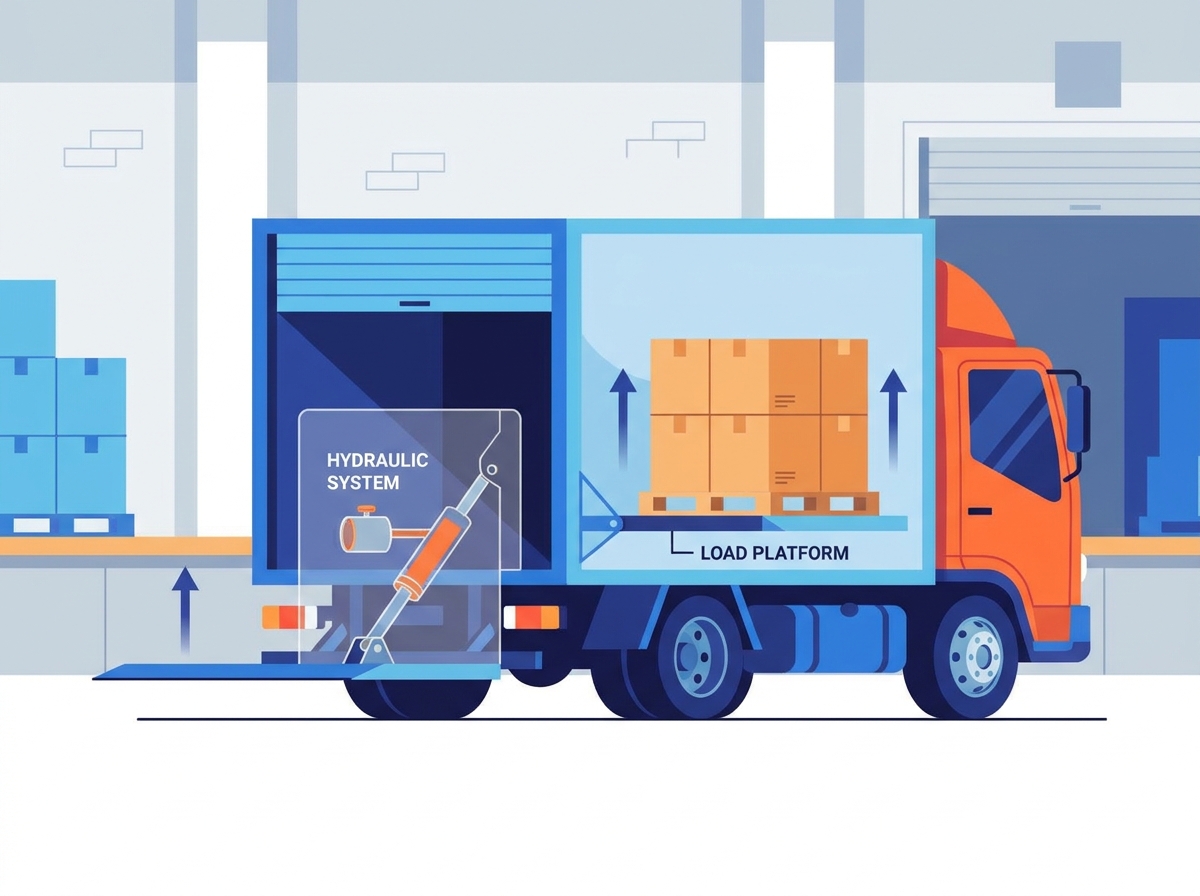
Electro-hydraulic tail lifts rely on the vehicle's electrical system and hydraulic components. The installation must use suitable wiring, protection, grounding, and mounting arrangements as specified by the manufacturer.
The electrical supply should support the lift's requirements under the intended operating conditions. Frequent lifting cycles, long cable runs, and inadequate battery charging can affect system performance.
Hydraulic components and hoses must also be routed and installed correctly. Improper mounting or unsuitable modifications may create mechanical or electrical hazards.
A preventive maintenance plan helps identify wear and damage before they interrupt vehicle operations.
Depending on the model and manufacturer's instructions, checks may include:
Inspecting hoses, fittings, cylinders, and the area around the hydraulic power pack for leaks or damage.
Checking pivot points, pins, fasteners, and mounting structures.
Inspecting the platform for cracks, deformation, corrosion, or surface damage.
Testing the controls and installed safety devices.
Checking warning lights, labels, and mechanical locks where fitted.
Checking hydraulic fluid and replacing it according to the specified schedule.
Inspection intervals should follow the manufacturer's guidance, applicable regulations, and the actual duty cycle. Damaged equipment should be taken out of service until it has been assessed and repaired appropriately.
Tail lift operation involves moving loads, pinch points, and potential fall hazards. Operators should be trained for the specific equipment and follow its operating instructions.
Before each operation, confirm that the surrounding area is clear and that the vehicle is positioned securely. Keep people away from the moving platform and its crush zones. Position and secure the load as instructed, and never exceed the rated capacity or permitted load distribution.
Use installed safety devices as intended. Do not bypass interlocks or rely on a safety feature unless it is fitted and approved for the model.
Inspection and operator requirements depend on the country, the type of equipment, and the way it is used. Fleet owners should identify the applicable local rules and keep required inspection, maintenance, and training records.
For international fleets, confirm requirements in each operating jurisdiction rather than applying a single inspection interval worldwide.
A truck tail lift helps move cargo between the ground and a commercial vehicle's loading floor. Its performance depends on the lifting mechanism, platform design, rated capacity, vehicle compatibility, and operating conditions.
Before purchasing, compare tail lift types, verify load requirements, review chassis and axle limits, and confirm the installation and maintenance arrangements. A suitable lift should match the fleet's real delivery tasks while supporting safe, reliable cargo handling.
A truck tail lift is a powered platform installed at the rear of a commercial vehicle. It raises or lowers cargo between ground level and the vehicle's loading floor.
An electric motor typically drives a hydraulic pump, which directs pressurized fluid to cylinders that move the platform. The exact lifting and lowering mechanism depends on the model.
Both terms generally refer to a powered lifting platform at the rear of a commercial vehicle. “Tail lift” is common in the UK and many other markets, while “lift gate” is common in North America.
Check the manufacturer's rated capacity and load-position requirements. Consider the cargo, handling equipment, load distribution, vehicle payload, and rear axle limits before selecting a model.
In many cases, retrofitting is possible, but it depends on chassis compatibility, axle limits, mounting requirements, electrical supply, and available space. Have the vehicle and proposed installation assessed before ordering.
